

News
The strength of partnerships in drug discovery: An interview with Dr. Ton Rijnders
The European Lead Factory (ELF) is a pan-European drug discovery project and flagship open innovation resource. The goal of the ELF is to screen novel drug targets and phenotypes against a high-quality compound library to deliver innovative drug discovery starting points.
The project has gone through two Innovative Medicines Initiative (IMI)-funding rounds, spanning almost 10 years in total. The first phase, which for the purpose of this interview we will refer to as ELF1, ran from 2013-2018, while the second phase, ELF2, began directly on the back of the first project in 2018 and officially comes to a close in November 2023. As we enter the final critical year of this long-running initiative, we thought it fitting to interview one of the programme’s founding fathers: Dr. Ton Rijnders.
Ton is a scientific leader at Lygature – the ELF’s coordinating partner. He was directly involved in setting up the programme in 2013 and has held several roles during this time. We asked Ton to reflect on the last nine years of the ELF, to comment on the highlights and achievements to date, and to hint at what might lie ahead in the future for this unique drug discovery platform.

Can you tell us about yourself and your role within the ELF?
I have a long history in drug discovery. Before joining Lygature and helping to establish the ELF, I was Vice President Discovery at the pharmaceutical company, Organon. My drug discovery roots date back to the pre-collaboration era when we kept doors closed and worked in isolation from other entities. We now know that this approach doesn't work. Collaborative efforts between industry competitors and academic groups are the most effective solution for innovation. In the early drug discovery space, we can safely say that the ELF is regarded as an example of success in this regard.
Within the ELF, I have held several roles over the years including being a member of the project executive team, leading the public screening consortium, and chairing the selection committee. Most recently, I have managed the sustainability team. It has been a privilege to have been involved in all these various aspects of the project, which have provided many unique learning opportunities.
Can you explain what was accomplished under ELF1 and what the programme set out to achieve in the second project term?
The European Lead Factory was set up to accelerate the long, complex, and expensive process of drug discovery that is so critical to developing innovative medicines for global health challenges. Back in 2013, seven large pharmaceutical companies decided to pool their compound collections and open these “treasure chests” of assets to academia and small- and medium-sized enterprises (SMEs) searching for drug discovery starting points. With this and the support of IMI, the ELF was born as a shared asset for open innovation in drug discovery – a first of its kind in Europe.
Under ELF1, we successfully composed a library of over 500,000 compounds, crowdsourced 88 disease targets from the scientific community, and delivered close to 72 qualified hit lists to the research community as starting points for new drug discovery programmes. So far, the ELF1 programmes have resulted in five patents, two partnering deals between academics and investors, and close to 90 peer-reviewed scientific publications. The results have shown that the ELF can successfully advance biological concepts into drug discovery projects that benefit academia, industry, and ultimately society.
With the tools, partnerships, and assets in place, we were fortunate to be able to continue a second term of the programme under IMI funding. ELF1 was the starting point. It laid a solid foundation for new initiatives. We built upon this legacy under ELF2 and were able to mobilise our extensive European network of existing contacts to engage with new life science hubs in academia and industry to source more innovative biology discoveries. A new addition under ELF2, which we are proud of, was the inclusion of phenotypic screening programmes.
Our aim under the second project term was to capitalise on the investments made under ELF1 and continue our mission of finding new medicines for unmet medical needs. We sought to take a strategic approach to our portfolio management not only by looking at the ‘best proposals’ but also at the spread of proposals across different therapeutic areas. We were interested in securing a good balance of projects that were selected based first and foremost on patient benefit, but also on scientific impact, risk diversity, and economic potential.
We have brought together a community of committed partners to address the drug development needs for a wide variety of therapeutic areas, targets, and technologies. The European Lead Factory is a proven infrastructure and resource knowledge centre, capable of delivering and making a valuable impact in the early drug discovery space.
What, for you, have been the highlights of the last few years?
Our objective of building upon ELF1 has been successful. Right at the start of the second project term, we took a detailed look at what went well in ELF1 and what could be improved. By and large, we were satisfied with the legal business framework that we had set up under ELF1, but in some respects, it was too detailed in its regulations. Our first task under ELF2, therefore, was to simplify our legal requirements. In my view, this was only possible because of the trust we had built between partners during ELF1. I cannot stress enough how important this relationship-building was. We have managed to consolidate our efforts in ELF2 and ensure a continuation of this unique group of partners. This is something I am extremely proud of. We have maintained a core group of enthusiastic and valuable partners that have been with us from the start. This is very special and rather unique.
Another highlight is the improvement we've seen in the quality of proposals. This is in large part thanks to the more systematic programme management approach we have implemented in ELF2. We have improved our proposal selection criteria and scientific advice, which were too vague under ELF1. By simply being more explicit about what programme owners (those submitting proposals) need to know, we received excellent proposals across several different therapeutic areas.
Can you go into more detail about the proposal distribution across therapeutic areas?
We didn't recruit for specific therapeutic areas and being critical, some are somewhat underrepresented. For example, if you look at unaddressed medical needs, then Alzheimer's and other neurodegenerative diseases are the ones that stand out and we haven't managed to come up with a lot of programmes in that area. Would we have accepted more of these proposals if we had received them? I think so, but there simply weren't enough proposals of the quality we were looking for.
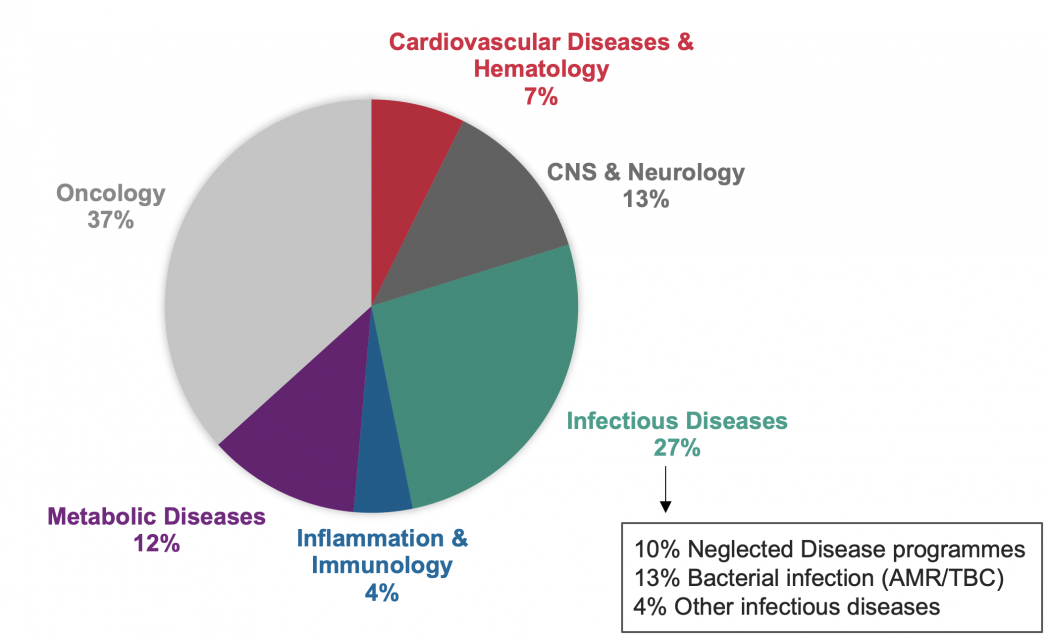
What has been very pleasing to see is the significant number of proposals received in the area of infectious diseases, including some neglected tropical diseases. We even had a couple of COVID-19 programmes, which shows that our infrastructure and library are suitable for this type of emergency work. When new pandemic threats arise, we can prove that we can respond quickly and at high quality with a decent chance of success. Having such an infrastructure and network in place is essential to the European drug discovery landscape, and to the benefit of European citizens.
All in all, we produced a balanced portfolio in terms of therapeutic spread and innovation potential. In terms of geographic distribution, the majority of the programmes came from Northwest Europe, but we also received proposals from a much wider European community. I think the geographic spread would have been even more comprehensive were we not limited by the pandemic travel restrictions.
Collaborative efforts between industry competitors and academic groups are the most effective solution for innovation. In the early drug discovery space, we can safely say that the European Lead Factory is regarded as an example of success.
How has the second phase of the programme progressed in comparison with the first phase? What differences did you observe in the portfolio and proposals between ELF1 and ELF2?
We have to recognise the fact that the COVID-19 pandemic deeply impacted our way of working and asked for a revised recruitment strategy. It also caused unforeseen hurdles in the execution of our screening programmes. Despite this, we managed to tap into new and existing networks to generate attention for the ELF. This resulted in several good screening proposals. We have been true to ourselves from a strategic portfolio management point of view and prioritised quality over quantity. Our preference under ELF2 was to have a high-quality portfolio and this is a goal we have successfully achieved.
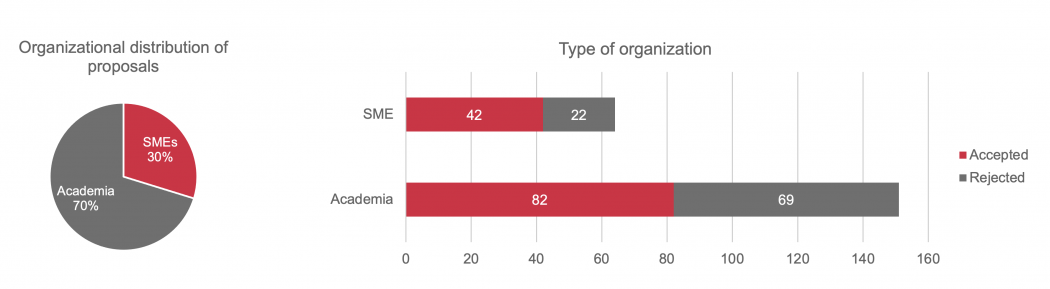
With regards to the differences between the projects: Firstly, as mentioned, we have changed the way we select programmes, and we foresee a good success rate in terms of the percentage of ELF2 programmes that will continue to the clinic.
To recap: under ELF2, we have established higher standards, higher selection criteria, and as a result, we continued to maintain a high-quality portfolio of programmes. We have also managed to generate good diversity in the portfolio, striking the right balance between economic feasibility, medical need, high risk, and high chances of success.
Can you tell us where the focus now lies for the ELF?
We are at the stage of the project where we can no longer recruit programmes from the research community to be screened with IMI funding. The remaining funds from IMI will be used to finalise the current portfolio. As such, a lot of emphasis is being placed on delivering interesting drug discovery starting points to the existing programmes before the end of the project in November 2023.
Throughout ELF2, we have discussed what happens next – what do we do with the European Lead Factory after 2023? I'm referring here to the sustainability of the project, which requires bringing together many different parts. The most obvious need is to secure funding for ongoing screens. But we also need to find a common ground for partners to continue sharing their compounds and working together on new screening programmes. During the first years of ELF2, we focused a lot on figuring out all these questions. Sustainability has been an ongoing topic of attention throughout.
What developments have you made in terms of sustainability?
Under ELF2, we have rolled out a new partnering initiative, whereby we offer charities and foundations the opportunity to make use of the ELF assets and services against payment. This is an example of how we can work towards a future for the ELF. So far, we have established the framework in terms of what we can offer to charities, what is of appeal to them, what costs they might be willing to cover, and how proposals can be tailored to meet the desired requirements – all whilst ensuring that the wishes and remits of our partners are considered.
We have successfully managed to complete this work. We have secured contact with several charities and have agreements in place. I expect that we will soon be announcing the formalisation of the first charity partnership. This is an exciting new chapter for the ELF. We hope to recruit a maximum of 20 screens before the project ends.
Can you comment on the lessons learnt under the second phase of the ELF?
The charity-funded screening work has definitely been a learning exercise in how to sustain a well-established project beyond its funding term. Under this framework, the costs for running the screens lie with the charities. However, we are also continuing to look for other ways of funding programmes. This is work in progress. It requires having a new set of arrangements in place, such as the maintenance of the compound library – one of our most important assets. I'm happy that overall, even without having complete agreements in place, our compound owners have expressed their willingness to continue the compound sharing and make them available for the research community. This is important. It allows us to approach other funders and other initiatives to explain that we have an infrastructure in place with the experience of running large-scale screens for academic programme owners, as well as a compound set that cannot be accessed in any other way. This is such a valuable asset. We are in a good place.
When asked what is needed to make public-private partnerships a success, my advice is: let the work be driven by the scientists with all partners sitting together – that’s the only way to ensure a successful outcome.
Can you comment on the importance of good relationships and partnerships in early drug discovery and how you have seen this play out in the ELF?
I am absolutely convinced that if we had not established the close partnership we had under ELF1, we would never have achieved the quality output that we have under ELF2.
When asked what is needed to make public-private partnerships a success, my advice is: let the work be driven by the scientists with all partners sitting together – that is the only way to ensure a successful outcome. Public-private partnerships are needed to bring different expertise together. Only then can we solve the complex problems that lie ahead of us. In the ELF, this means creating links between interesting biology and chemistry and fostering collaborations that can help push science forward.
Finally, can you reflect on the added value of the ELF in the (European) drug discovery landscape, the need for such an infrastructure, and the ambitions for the future?
In my view, when it comes to innovation in drug discovery and finding better treatments for patients, the role of the different players involved must be clearly defined. It's why programmes like the ELF are needed and why they are a success.
Truly innovative ways of addressing biology start with new understandings of biology and on the whole, this happens in academia. This is why we have to include the academic community in these types of partnerships. However, while the academic community is very good at exploring new biology, probing new mechanisms, and securing high-impact publications, they are not always able to progress to the next level – to translate biological insight into something that can treat patients. This is where industry comes in. With its resources and expertise, pharma and SMEs can help to create these new treatments. In this regard, partnerships like the ELF play a pivotal role. We bridge this critical gap between academia and industry.
I'm proud of what we have achieved, but there is still plenty of room to expand. I would like to see us build a support system for getting our local areas of expertise to work with local academic experts. I would also like us to expand in terms of the output that we generate – not just hits but really progressing towards clinical candidates – compounds that are suitable for testing in humans.
So yes, we have big ambitions for the future. For now, however, we have a critical year ahead – the final year of the project. There's a lot we still hope to achieve in terms of building collaborations with charities and foundations and finalising current commitments. I'm excited about what lies ahead.
Download a PDF of the interview
____
Useful links:
If you're interested in finding out more about the ELF’s partnering opportunities for charities and foundations, follow this link. And of course, don't hesitate to reach out to us directly via our programme office.
Previous interviews:
To illustrate the expertise, assets, and services behind the European Lead Factory, we have interviewed several members of the team, including representatives of the ELF programme office, the High Content Screening team, our partner the Medicines for Malaria Venture, as well as the programme clearance team.